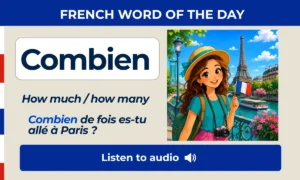
How To Use Combien (How much, how many) in French
Learn how to use “combien” in French with clear example sentences, pronunciation, and common expressions. Discover how to ask “how much?” and “how many?” naturally in French.

Learn how to use “combien” in French with clear example sentences, pronunciation, and common expressions. Discover how to ask “how much?” and “how many?” naturally in French.

Learn the meaning of the French noun location, a false cognate meaning “rental” or “renting,” with pronunciation tips, examples, and related vocabulary.
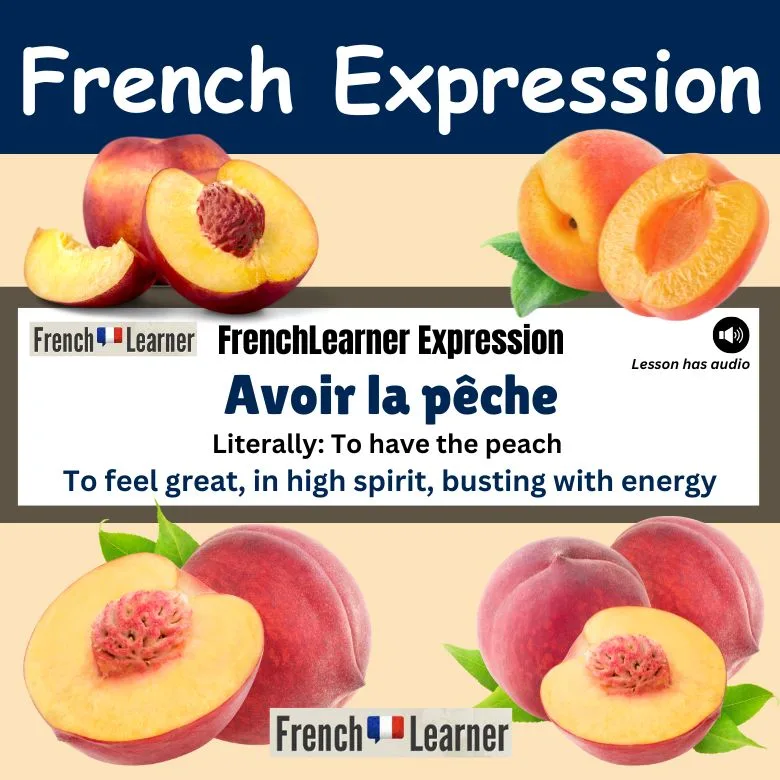
👉 See also: Avoir conjugation chart (to have) » Avoir la pêche is a fun and commonly used French idiom that translates literally to “to have the peach” and means “to feel great”, “to be in high spirits” or “to be full of energy”. Avoir la pêche to feel great

This lesson explains four ways to use the verb remettre, which has a very wide range of usages and meanings including to give or hand over, postpone, get better and start again. This verb combines the prefix re- (again) and mettre (to put). remettre to hand over, postpone, get better, start again

Learn how to use the French adjective *prochain(e)*, meaning “next,” including its placement before or after a noun, pronunciation, examples, and useful related expressions.