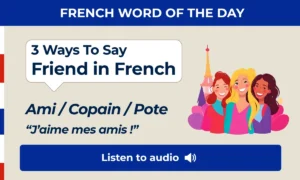
3 Ways to Say “Friend” in French
Friend in French can be said in three ways: “ami,” “copain,” and “pote.” This lesson shows how to pronounce each and explains the differences.

Friend in French can be said in three ways: “ami,” “copain,” and “pote.” This lesson shows how to pronounce each and explains the differences.
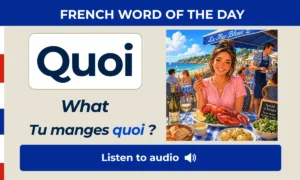
Learn how to use quoi in French to say “what” in informal questions, express confusion, and sound natural in everyday conversation. Includes clear examples and native audio to help you use it with confidence.

Start speaking French today with this step-by-step beginner guide from teacher David Issokson. Master core grammar and vocabulary with authentic native audio recorded by Marie Assel Cambier.
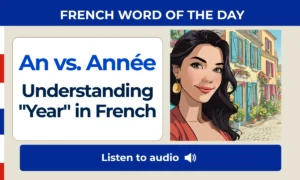
The French Word of the Day is an vs. année, two French words that both mean “year.” Learn when to use each one correctly, with clear rules, simple examples, pronunciation help, and native audio.

Happy in French is “heureux” (pronounced uh-ruh). The feminine form is “heureuse” (pronounced uh-ruhz). Another French word for happy is “content”. This post will explore heureux vs. content in depth through lots of fun example sentences (with audio).