French Expressions of Cause
Learn French expressions of cause, including pourquoi, parce que, puisque, comme, grâce à, à cause de and faute de, with clear explanations and examples.

Learn French expressions of cause, including pourquoi, parce que, puisque, comme, grâce à, à cause de and faute de, with clear explanations and examples.
Learn how to form and use the French passive voice with être and the past participle, including agreement rules, different verb tenses, par and de, reflexive constructions and practical examples.

What does “Voulez-vous coucher avec moi ce soir” actually mean, and do French people say it? Learn the literal meaning of this famous phrase, hear how to pronounce it with native audio, and master the correct grammatical usage of the verb vouloir.
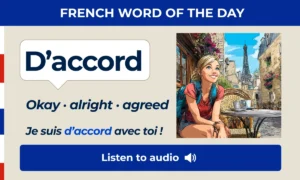
D’accord is a common French expression meaning “okay”. This lesson explains its meaning, pronunciation, and real-life examples — and shows the difference between “d’accord” and “je suis d’accord” in everyday conversation.

👉 See also: Aller example sentences (Word of the Day lesson) » Level A1 (Beginner) The French Word of the Day is ça va, a phrase with several meanings depending on context. As a question, “Ça va ?” means “How are you?”, but it also appears in many other common expressions — which we’ll explore…