
Étudier means ‘to study’ in French. The pressent tense conjugation of étudier is: J’étudie (I study), tu étudies (you study), il, elle étudie (he, she studies), nous étudions (we study) vous étudiez (you study) and ils, elles étudient (they study).
Étudier is a regular -er verb. This means means that its endings are the same as other regular -er verb such parler (to speak).
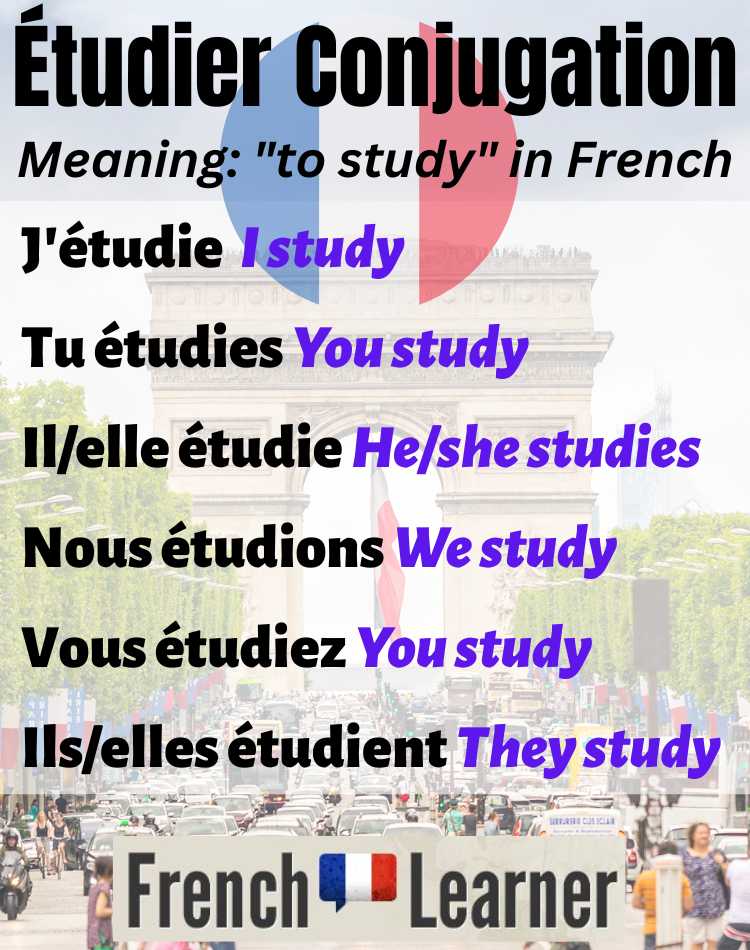
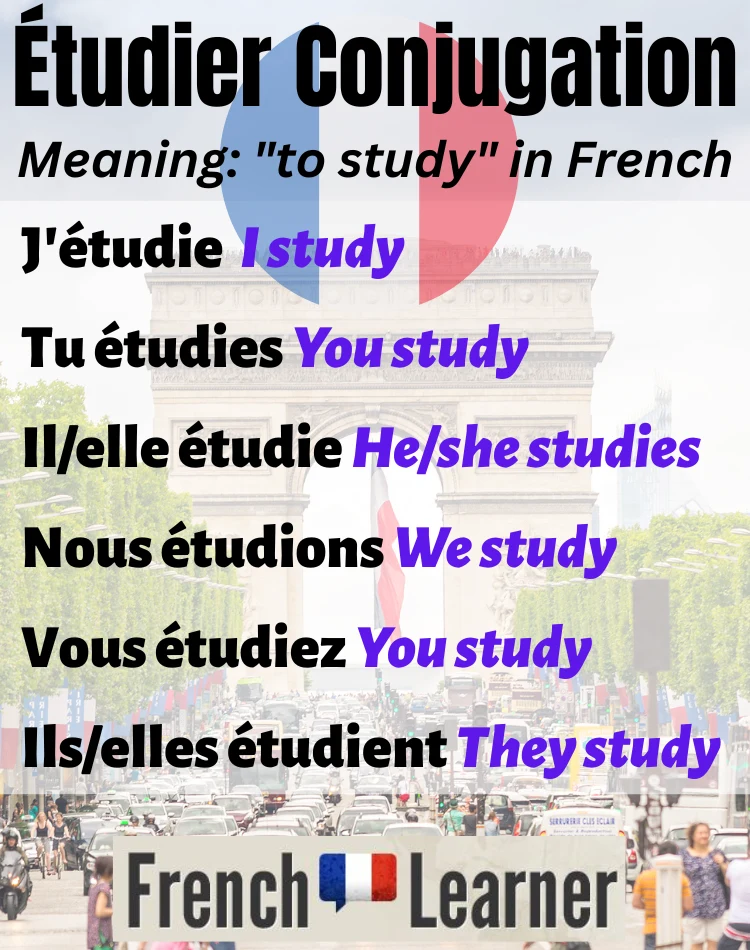
Étudier conjugation table: quick overview.
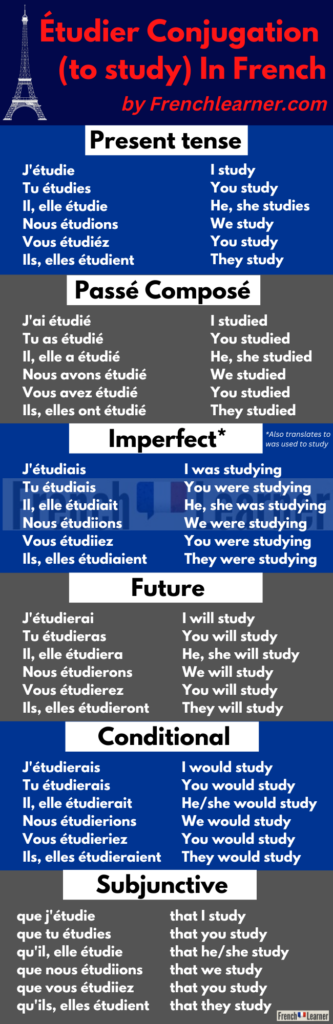
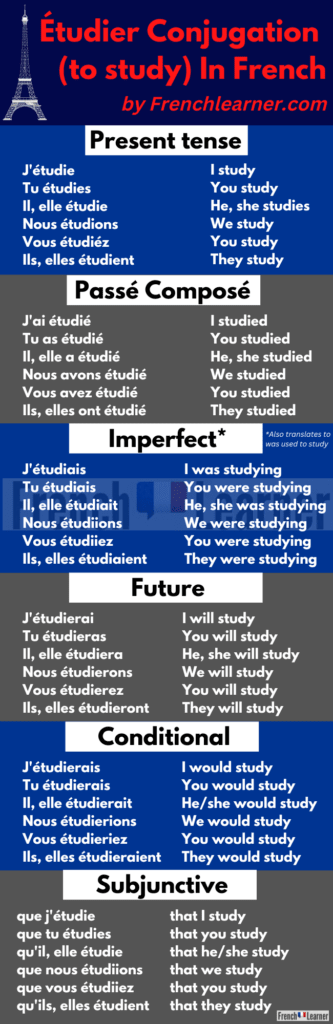
Étudier conjugation charts
Present tense
In the present tense, j’etudie translates to ‘I study’ and ‘I am studying’.
| J'étudie | I study | J'étudie le français à Paris. | I'm studying French in Paris. |
| Tu étudies | You study (singular, informal) | Tu étudies l'espagnol en Espagne. | You're studying Spanish in Spain. |
| Il, elle étudie | He, she studies | Elle étudie le japonais au Japon. | She's studying Japanese in Japan. |
| Nous étudions | We study | Nous étudions l'histoire européenne. | We're studying European history. |
| Vous étudiez | You study (plural, formal) | Vous étudiez la physique à l'université. | You're studying physics at the university. |
| Ils, elles étudient | They study | Ils étudient l'italien à Rome. | They're studying Italian in Rome. |
Passé composé
In the passé composé ‘j’ai étudié‘ translates to ‘I studied’.
| J'ai étudié | I studied | J'ai étudié le français quand j'étais en terminal. | I studied French when I was a senior. |
| Tu as étudié | You studied (informal, singular) | Tu as étudié l'espagnol avant de voyager au Mexique. | You studied Spanish before traveling to Mexico. |
| Il, elle a étudié | He, she studied | Ella étudié la chimie à l'université. | She studied chemistry in university. |
| Nous avons étudié | We studied | Nous avons étudié dans une école française. | We studied in a French school. |
| Vous avez étudié | You studied (formal, plural) | Vous avez beaucoup étudié avant l'examen. | You studied a lot before the exam. |
| Ils, elles ont étudié | They studied | Ils ont étudié quelques verbes avant le voyage. | They studied a few verbs before the trip. |
Imperfect tense
The imperfect tense ‘j’étudiais’ translates to ‘I was studying’, ‘I used to study’ and ‘I studied’.
| J'étudiais | I was studying, used to study | J'étudiais le français quand j'étais un enfant. | I used to study French when I was a student. |
| Tu étudiais | You were studying, used to study (singular, familiar) | Tu étudiais l'espagnol quand Marie a téléphoné. | You were studying Spanish when Marie called. |
| Il, elle étudiait | He, she was studying, used to study | Elle étudiait la chimie mais maintenant elle étudie la physique. | She used to study chemistry but now she studies physics. |
| Nous étudiions | We were studying, used to study | Avant nous étudiions ensemble. | Before we used to study together. |
| Vous étudiiez | You were studying, used to study | Dans le passé vous étudiiez l'histoire française. | In the past you used to to study French history. |
| Ils, elles étudiaient | They were studying, used to study | Qu'est-ce qu'ils étudiaient à l'école. | What were they studying in school? |
Future tense
In the future tense j’étudierai translates to ‘I will study’.
| J'étudierai | I will study | J'étudierai le français quand je serai en France. | I'll study French when I'm inFrance. |
| Tu étudieras | You will study (familiar, singular) | Tu étudieras l'espagnol quand tu seras au Mexique. | You'll study Spanish when you're in Mexico. |
| Il, elle étudiera | He, she will study | Elle étudiera l'italien en Italie. | She will study Italian in Italy. |
| Nous étudierons | We will study | Nous étudierons l'histoire du pays avant le voyage. | We'll study the country's history before the trip. |
| Vous étudierez | You will study (formal, plural) | Est-ce que vous étudierez tous les verbes? | Will you study all the verbs? |
| Ils, elles étudieront | They will study | Ils étudieront avant de passer l'examen. | They'll study before taking the exam. |
Conditional tense
In the conditional tense j’étudierais translates to ‘I would study’.
| J'étudierais | I would study | J'étudierais le français si les verbes étaient plus faciles. | I'd study French if the verbs were easier. |
| Tu étudierais | You would study (familiar, singular) | Tu étudierais avec moi si tu avais plus de temps. | You'd study with me if you had more time. |
| Il, elle étudierait | He, she would study | Elle étudierait le latin si le cours était disponible. | She'd study Latin if the course were available. |
| Nous étudierions | We would study | Nous étudierions dehors s'il faisait beau. | We'd study outside if it were nice out. |
| Vous étudieriez | You would study (formal, plural) | Vous étudieriez le thaï si c'était plus utile. | You'd study Thai if it were more useful. |
| Ils, elles étudieraient | They would study | Ils étudieraient l'espagnol s'ils avaient plus de temps libre. | They'd study Spanish if they had more free time. |
Subjunctive mood
The French use the subjunctive mood to express wishes, emotions and doubts. Que j’étudie translates to “that I study”.
| que j'étudie | that I study | Il faut que j'étudie le français avant de voyager en France. | I need to study French before traveling to France. |
| que tu étudies | that you study (familiar, singular) | Je veux que tu étudies avant l'examen. | I want you to study before the exam. |
| qu'il, elle étudie | that he, she studies | Je suis heureux qu'elle étudie tous les verbes. | I'm happy she's studying all the verbs. |
| que nous étudiions | that we study | Il vaut mieux que nous étudiions le chinois avant de voyager en Chine. | We'd better study Chinese before traveling in China. |
| que vous étudiiez | that you study (formal, plural) | Il faut que vous étudiiez la langue avant votre départ. | You need to study the language before your departure. |
| qu'ils, elles étudient | that they study | Je ne sais s'ils étudient le vocabulaire. | I don't know if they're studying the vocabulary. |
