French Word of the Day: Le Projet (Project/Plan)
In today’s lesson we will examine the French word projet. This word can cause some confusion as its meanings include both “project” and “plan”.

In today’s lesson we will examine the French word projet. This word can cause some confusion as its meanings include both “project” and “plan”.

👉 See also: List of french false cognates (faux amis) » In today’s lesson we’ll take a look at the French word pièce. While there’s nothing particularly difficult about this word, it has several meanings including room, piece, coin and more. We’ll cover all these usages with example sentence and audio.

In today’s lesson we’ll have a close look at the word boîte. The most common meaning of boîte is “box”. However, this versatile word has many other meanings including “can” and even “nightclub”! Keep reading to master how to use this word with example sentences and audio.
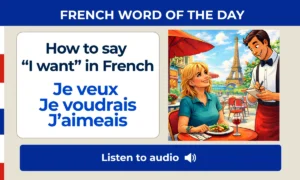
Learn how to say “I want” in French using je veux, je voudrais, and j’aimerais. Understand the differences in tone and use each naturally with clear examples and audio.
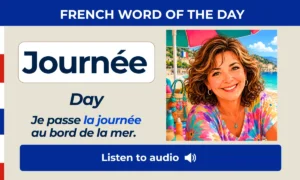
Learn the meaning of journée in French, how to pronounce it, and how to use it in common expressions such as bonne journée, with native audio and example sentences.