
Demain — Meaning, pronunciation, examples with native audio
Learn how to use demain in French with simple examples, native audio, and clear explanations. Discover how this common adverb means “tomorrow” and how to use it in everyday French.

Learn how to use demain in French with simple examples, native audio, and clear explanations. Discover how this common adverb means “tomorrow” and how to use it in everyday French.

Chiant means “annoying,” “irritating,” “boring,” or “a pain in the neck” in French. This lesson explains its meaning, pronunciation, and common example sentences — an informal slang word used only in casual conversations.

Learn how to use drôle in French with simple examples, native audio, and clear explanations. Discover how this common adjective can mean “funny,” “amusing,” “strange,” or “odd” depending on context.

See also:👉 Avoir conjugation chart (to have) »👉 Chiant (annoying, pain in the neck) » If you travel to France you’ll inevitably hear an expression that almost never appears in the textbooks: En avoir marre. The translations of this expression are “to be fed up”, “to be sick of” and “to have had it”. This post will…
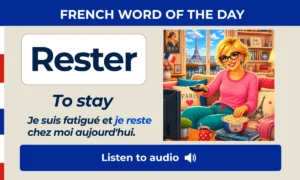
Learn how to use rester in French to say “to stay” and “to remain” with clear, real-life examples. Includes simple explanations and native audio to help you use it naturally in conversation.