

See also:
👉 Bonjour — hello, good morning »
👉 30 French greetings (with Marie’s audio) »
Level A1 (Beginner)
Lesson written by French teacher David Issokson for students who want to learn French online, with native audio by Marie Assel Cambier, a voice artist from France.
The French Word of the Day is bonsoir, a useful French greeting meaning both “good evening” and goodbye / good night during the evening. But, what’s the difference between bonsoir and bonne soirée, which you’ll also commonly hear? Listen to Marie’s audio examples and it will click.
✅ Meaning
✅ Pronunciation
✅ Example sentences
✅ Related Words & Expressions
✅ Related lessons
Subscribe to the French Word of the Day
📘 Bonsoir meaning in French
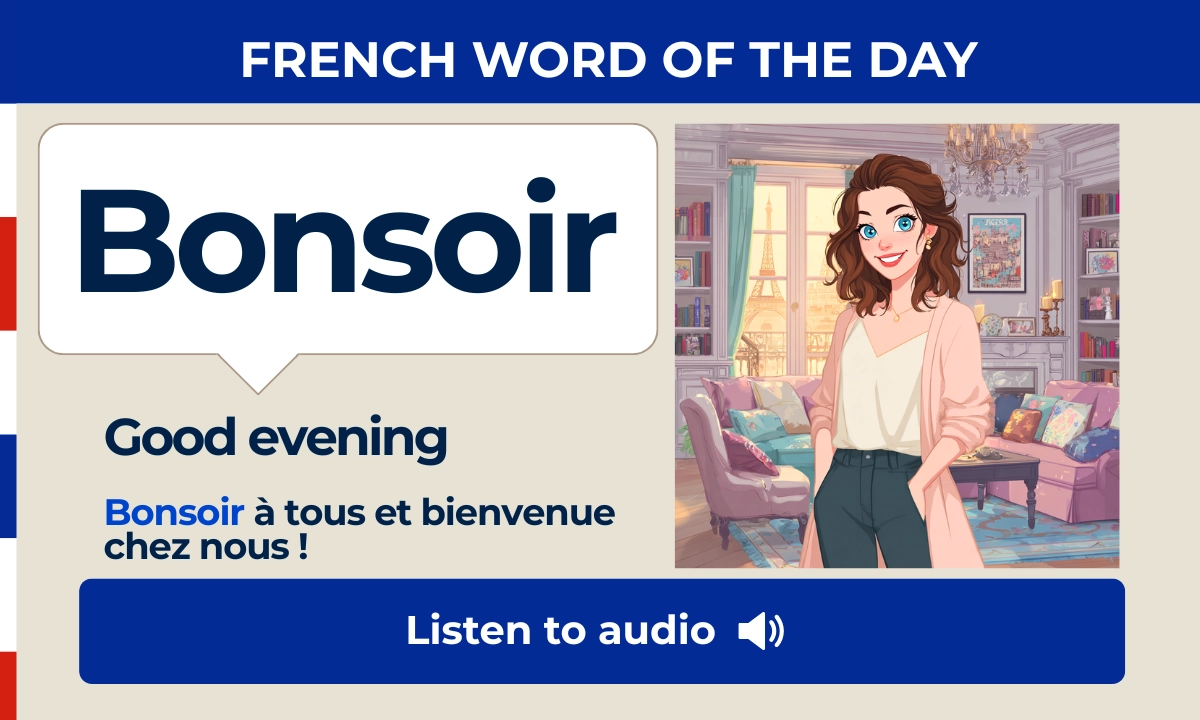
Bonsoir means “good evening” and is used both to greet someone when you arrive and to say “goodbye” or “goodnight” during the evening. It’s very common and works in both formal and informal situations. French speakers usually start using bonsoir around 5–6 p.m., once they switch from bonjour, depending on the social context.
❓ Bonsoir vs. bonne soiree
Bonne soirée, on the other hand, means “have a nice evening.” It’s not a greeting — it’s used when leaving, to wish someone a pleasant evening ahead. You would not say bonne soirée when first meeting someone. Instead, you say bonsoir when arriving, and bonsoir or bonne soirée when saying goodbye.
🎧 Bonsoir pronunciation in French
The pronunciation of bonsoir is /bɔ̃.swaʁ/ (IPA), which sounds roughly like “bon SWAHR.”
📝 Bonsoir examples & usage
Bonsoir à tous et bienvenue chez nous !
Good evening everybody and welcome to our home!
Bonsoir ! Reposez-vous bien et à demain !
Good night! Sleep well and see you tomorrow.
Je vous souhaite une bonne soirée !
I wish you a good evening!
👉 See also: Bonne journée — have a nice day »
❓ Want to feel more confident in French?
🎯 À Moi Paris — This is my top recommendation for online French courses, and it pairs wonderfully with my daily lessons. Camille Chevalier teaches with engaging audio stories that she records at three speeds. Her specialty is helping students with pronunciation and bridging the gap between textbook French and real spoken French as you hear it on the streets of Paris.
👉 Explore À Moi Paris »
👉 Read my review »
🎧 French Verb Drills — Having trouble with French verb conjugations? Camille’s audio drills break everything down step by step so you can finally lock in the patterns and speak with confidence.
If you purchase the courses, I may earn a small commission — at no extra cost to you.
🔗 Related words and expressions
- bonne soirée — have a nice evening
- bonne nuit — good night (when leaving to sleep)
- salut — hi / bye (informal, any time)
- bonjour — hello / good morning (daytime counterpart)
- au revoir — goodbye
- à ce soir — see you tonight
- à plus tard — see you later
- enchanté(e) — nice to meet you (often follows bonsoir)
- bien le bonsoir — polite or slightly old-fashioned evening greeting
- bonsoir tout le monde — good evening everyone
📚 Related lessons on FrenchLearner!
👉 bonne journée — have a nice day »
👉 salut — hi, bye »
👉 bonjour — hello, good morning »
👉 au revoir — goodbye »
👉 enchanté(e) — nice to meet you »
🚀 Continue learning French online on FrenchLearner!
👉 French Word of the Day »
👉 French Vocabulary lists »
👉 French for beginners guide »
👉 French song lyrics hub »
👉 French conjugations hub »
Bonsoir — Frequently asked questions
What does bonsoir mean in English?
Bonsoir means “good evening.” It’s a common French greeting used in the evening and can also function as a polite goodbye during evening hours.
What is the difference between bonsoir and bonjour?
Bonjour is used during the day, while bonsoir is used in the evening. French speakers typically switch to bonsoir around 5–6 p.m., depending on the social context.
Can bonsoir mean goodbye?
Yes. Bonsoir can be used not only to greet someone, but also to say goodbye or good night during the evening, especially in polite or formal situations.
When do French people start saying bonsoir?
There’s no fixed rule, but French speakers usually begin using bonsoir in the early evening, often around 5–6 p.m., once the day shifts into evening activities.


