
Level A2 (Upper Beginner)
Lesson written by French teacher David Issokson for students who want to learn French online, with native audio by Marie Assel Cambier, a voice artist from France.
The French Word of the Day is feu d’artifice, meaning “fireworks.” Today you’ll find out: “Why is the French word for fireworks fire of artifice, and what does artifice mean?” You’ll love Marie’s audio examples today!
✅ Meaning
✅ Pronunciation
✅ Example sentences
✅ Related Words & Expressions
✅ Related lessons
Subscribe to the French Word of the Day
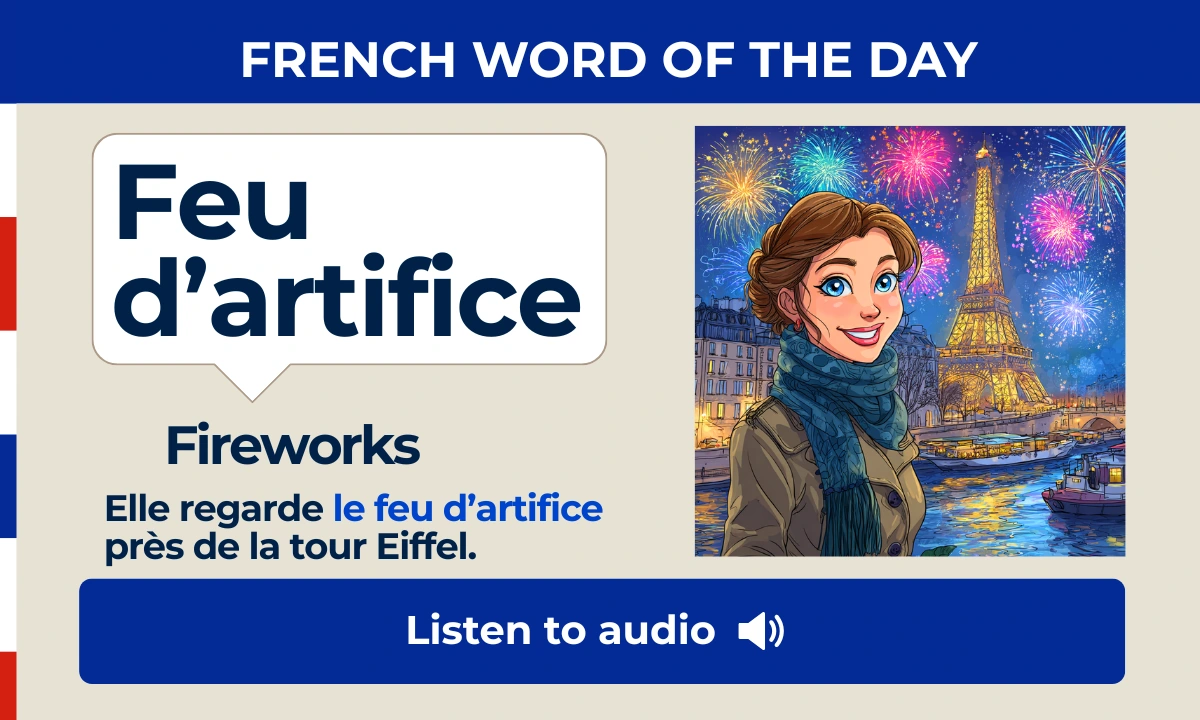
📘 Feu d’artifice meaning in French
Feu d’artifice (m.) means “fireworks” in French. English always uses the plural “fireworks,” but French does not: Le feu d’artifice is commonly used to refer to the fireworks show or display, while les feux d’artifice is common in everyday French when people talk about the fireworks themselves. Feu d’artifice literally translates to “fire of artifice,” with artifice referring to something made by human skill. For example, “Les feux d’artifice illuminent le ciel.” (The fireworks light up the sky.)
🎧 Feu d’artifice pronunciation in French
The pronunciation of feu d’artifice is /fø daʁ.ti.fis/ (IPA), which sounds roughly like “feuh dar-tee-FEESS.”
📝 Feu d’artifice usage examples
Le feu d’artifice est un spectacle de lumière très apprécié pour le Nouvel An.
Fireworks are a light show that is very popular for New Year’s.
Elle regarde le feu d’artifice près de la tour Eiffel.
She is watching the fireworks near the Eiffel Tower.
Nous regardons le feu d’artifice à minuit pour accueillir la nouvelle année.
We watch the fireworks at midnight to welcome the new year.
Ils prennent des photos des feux d’artifice qui illuminent le ciel.
They take photos of the fireworks lighting up the sky.
More New Year’s Vocabulary
Explore more essential French words and expressions used around New Year’s celebrations. Each lesson features native French audio by Marie Assel Cambier.
❓ Want to feel more confident in French?
🎯 À Moi Paris — This is my top recommendation for online French courses, and it pairs wonderfully with my daily lessons. Camille Chevalier teaches with engaging audio stories that she records at three speeds. Her specialty is helping students with pronunciation and bridging the gap between textbook French and real spoken French as you hear it on the streets of Paris.
👉 Explore À Moi Paris »
👉 Read my review »
🎧 French Verb Drills — Having trouble with French verb conjugations? Camille’s audio drills break everything down step by step so you can finally lock in the patterns and speak with confidence.
If you purchase the courses, I may earn a small commission — at no extra cost to you.
🔗 Related words and expressions
- la Saint-Sylvestre — New Year’s Eve
- le Nouvel An — New Year
- le réveillon — festive evening meal / party
- minuit — midnight
- le compte à rebours — countdown
- faire la fête — to celebrate / party
- trinquer — to toast (with drinks)
- le champagne — champagne
- se souhaiter la bonne année — to wish each other a happy new year
📚 Related lessons on FrenchLearner!
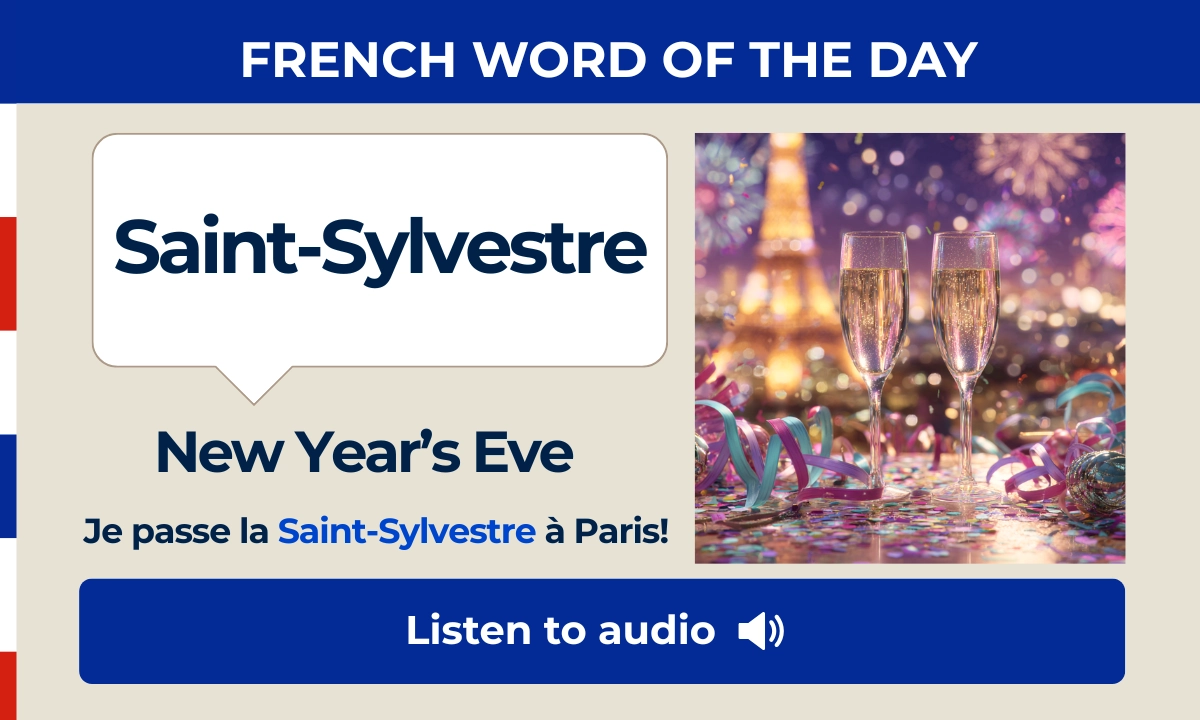
👉 la Saint-Sylvestre — New Year’s Eve »
👉 le Nouvel An — New Year »
👉 bonne année — happy new year in French »
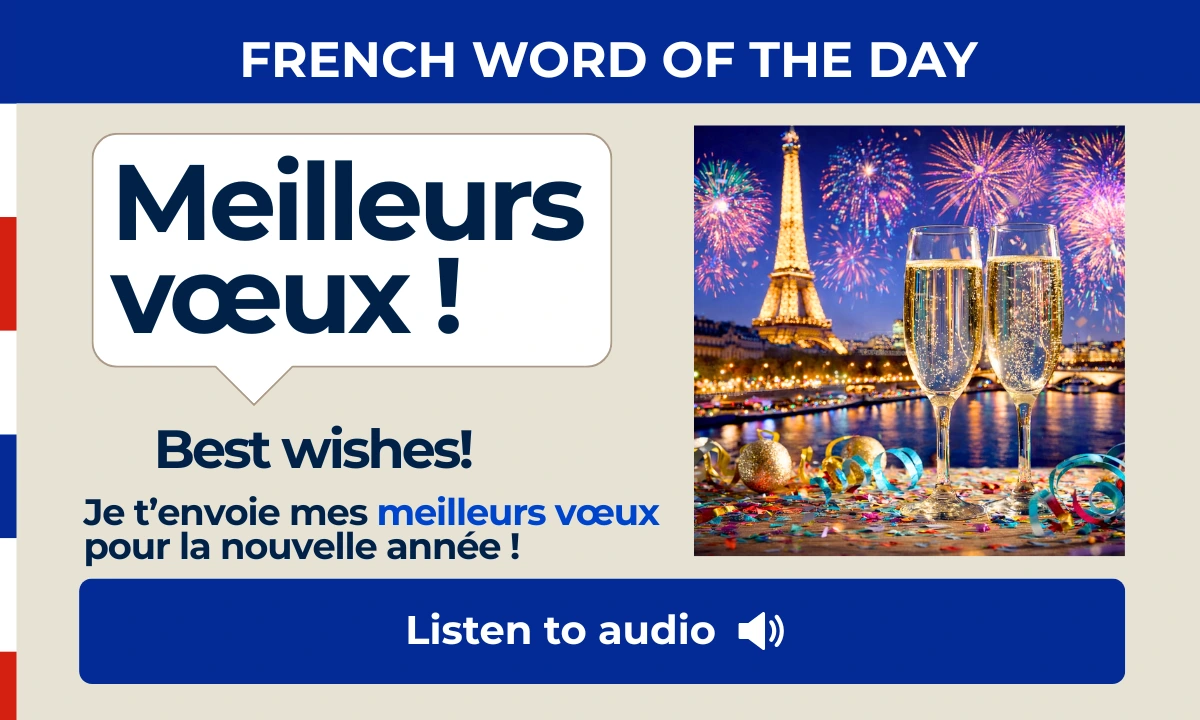
👉 meilleurs vœux — best wishes »
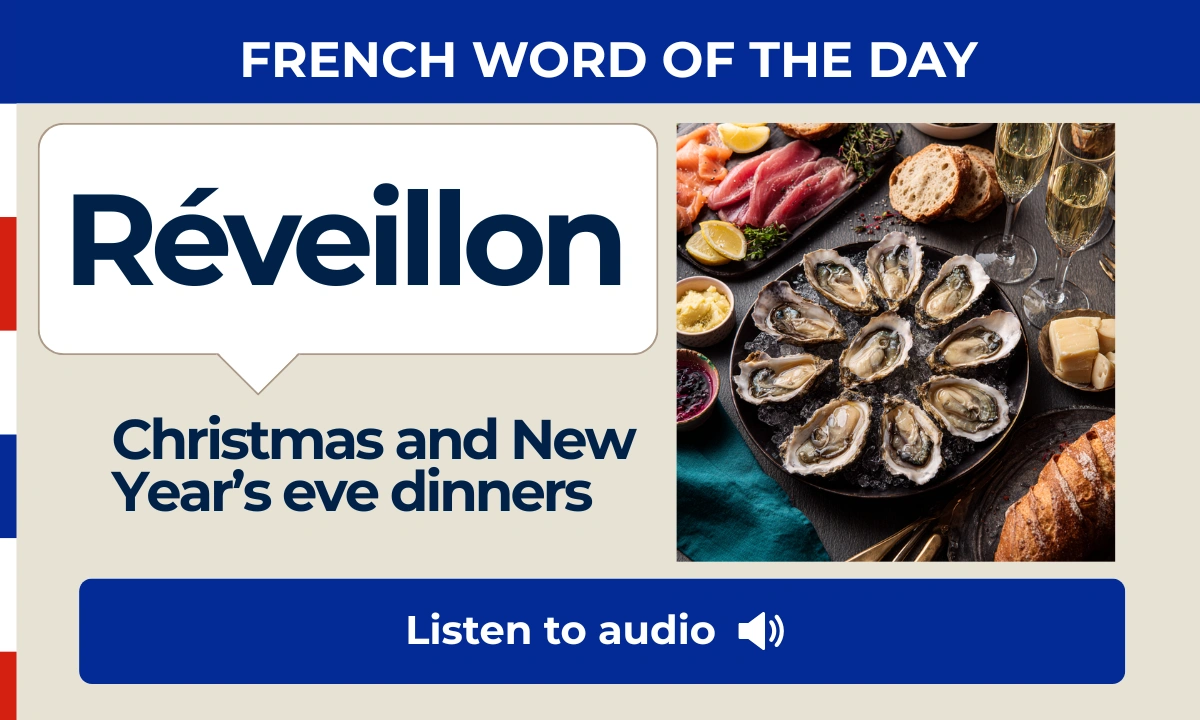
👉 le réveillon — New Year’s eve »
👉 French Christmas (holidays) lessons hub »
🚀 Continue learning French online on FrenchLearner!
👉 French Word of the Day »
👉 French Vocabulary lists »
👉 French for beginners guide »
👉 French song lyrics hub »
❓ Feu d’artifice — Common Questions
What does feu d’artifice mean in French?
It means “fireworks” and refers to a fireworks display as a whole.
Is feu d’artifice singular or plural?
The standard form is singular: “feu d’artifice.” In everyday spoken French, people often use the plural “les feux d’artifice.”
Why do French people say les feux d’artifice, and can both forms be used?
Yes. Both forms are correct and natural. The plural les feux d’artifice is commonly used when talking about watching or attending fireworks displays, or when describing the fireworks in the sky.


