
👉 Check out my Word of the Day lesson on le pays (country) »
👉 Learn the French geographical prepositions »
Learning how to say countries, nationalities, and languages in French isn’t difficult — you just need to follow a few simple rules. This page gives you complete vocabulary tables for 100+ countries, including their French names, nationality adjectives (m/f), and languages.
Countries, Nationalities, and Languages in French
Notes on names of countries, nationalities and languages
Country names have a gender
There are two key aspects to note about the names of countries in French. Firstly, all countries are preceded by the definite article (le, la, les).
Hence, France is la France and Canada is le Canada.
The second point to know is that most feminine countries end in the letter -e while masculine counties end in other letters.
For example, la Suisse (Switzerland) and le Brésil (Brazil). There are exceptions, however. Le Mexique (Mexico) ends in an -e and is masculine.
There are few countries which do not take a direct article. These tend to be island nations: Singapour (Singapore) and Cuba and Haïti (Haiti).
If you want to say, “I’m going to + masculine country”, use the preposition au. For example, Je vais au Canada (I’m going to Canada).
If you want to say “I’m going to + feminine country”, use the preposition en. For example, Je vais en France (I’m going to France).
If you want to say, “I’m going to + plural country”, use the preposition aux. For example, Je vais aux États-Unis.
Nationalities follow adjective rules
Nationalities are adjectives and follow the agreement rules for adjectives. This page covers French adjective agreement rules extensively.
If a nationality ends in a consonant, simply add an -e to make it feminine. For example, americain/americaine (American) and allemand/allemande (German).
If the masculine form of a nationality ends in -e, the feminine form is the same. Some examples are belge (Belgian), russe (Russian) and suisse (Swiss).
Many nationalities which end in -ien in the masculine form end in -ienne in the feminine form. Examples are vietnamien/vietnamienne (Vietnamese), italien/italienne (Italian) and indien/indienne (Indian).
Some nationalities have completely different masculine and feminine forms. For example, grec/greque (Greek).
There is one more aspect to note about nationalities. The French write nationalities when used as an adjective in the lower case.
For example, un homme français (a French man) or un homme anglais (an English man). However, when using the nationality of the form of a noun, the French use the upper case. For example: un Français (a Frenchman) or un Anglais (an Englishman).
Language names are based on the masculine adjective
The names of langauges are almost always the masculine form of the adjective associated with the country’s nationality.
For example, the adjective for English in the masculine form is anglais. Hence, l’anglais is name of the English language.
The same applies to French. Français is the masculine form of the adjective for the nationality. Hence, the name of the language is le français.
The French write names of languages in the lower case. There are a few exceptions to this guideline where the names of languages differ from the country’s nationality adjective in the masculine form.
Exceptions:
- la tagalog: official Filipino language; nationality adjective: philippin/philippine
- le thaï: language of Thailand; nationality adjectives: thaïlandais/thaïlandaise
- le khmer: Cambodian language; nationality adjectives: cambodgien, cambodgienne
- le ourdu: language of Pakistan; nationality adjectives: pakistanais/pakistanaise
Continents
The continents in French are all feminine. Adjectives for continents are also included in the table below. In English, one can say Latin American in addition to South American.
In French, Latin American is latino-américain in the masculine form and latino-américaine in the feminine form.
Note that Australia is both a country and a continent. On the countries and languages section below, I’ve included it in the Asian table.
| English | French | Adejctive |
| Africa | l'Afrique | africain(e) |
| North America | l'Amérique du Nord | nord-américain(e) |
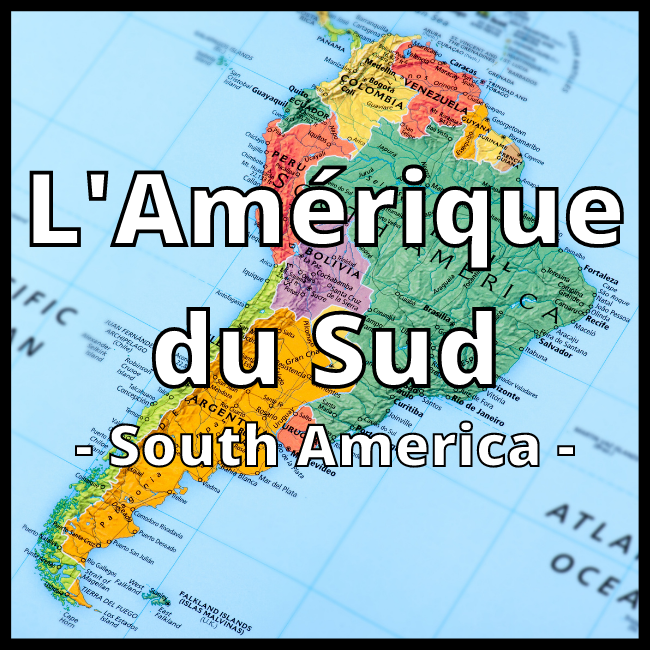
| South America | l'Amérique du Sud | sud-américain(e) |
| Europe | l'Europe | européen(ne) |
| Asia | l'Asie | asiatique |
| Australia | l'Australie | australien(ne) |
North & Central America
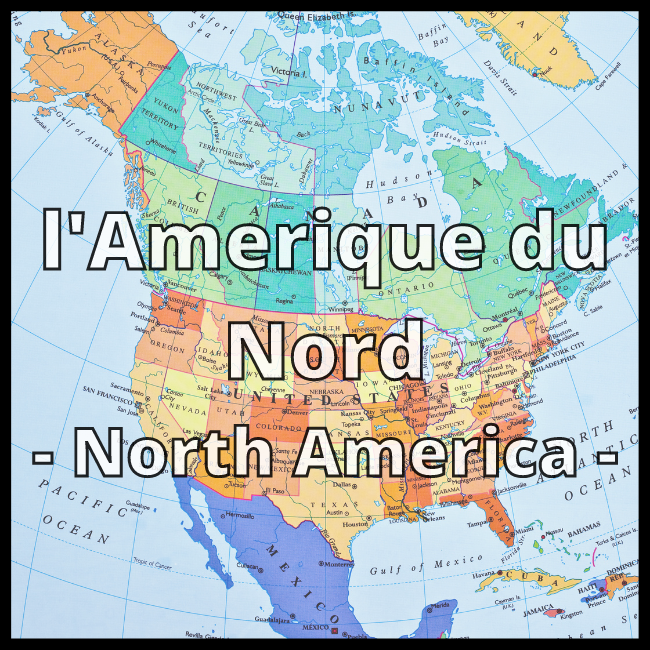
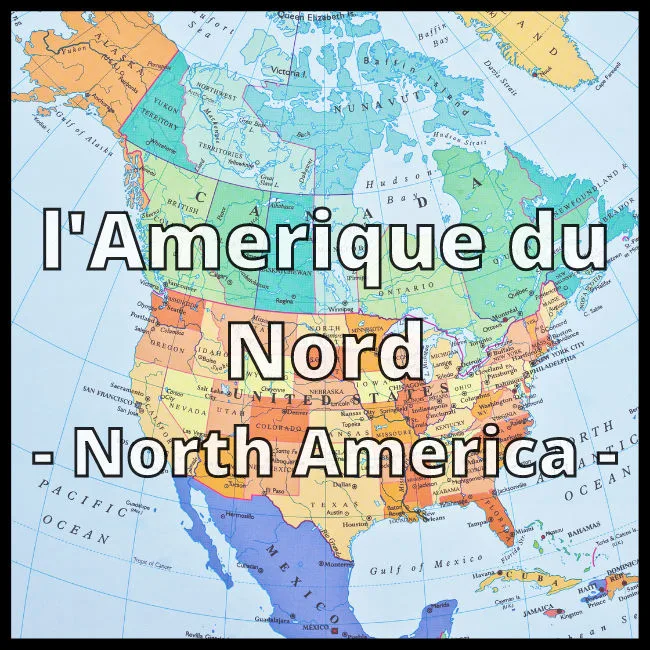
The following are country names, nationalities and languages for countries in North America and Central America.
Throughout many years of teaching, we’ve found that many students have a very difficult time with the pronunciation of Les États-Unis (the United States).
We have included a quick video going over this pronunciation under this table.
| Country | French Name | Nationality (m/f) | Language |
| United States | les États-Unis d’Amerique | américain(e) | l'anglais |
| Mexico | le Mexique | mexicain(e) | l'espagnol |
| Canada | le Canada | canadien(ne) | l'anglais, le français |
| Guatemala | le Guatemala | guatémaltèque | l'anglais |
| El Salvador | le Salvador | salvadorien(ne) | l'anglais |
| Panama | le Panama | panaméen(ne) | l'anglais |
| Haiti | Haïti | haïtien(ne) | le créole |
| Dominican Republic | la République dominicaine | dominicain(e) | l'anglais |
| Belize | le Bélize | bélizien(ne) | le créole, l'anglais |
| Nicaragua | le Nicaragua | nicaraguayen(ne) | l'anglais |
| Cuba | Cuba | cubain(e) | l'anglais |
| Jamaica | Jamaïque | jamaïcain(e) | l'anglais |
| Honduras | le Honduras | hondurien(ne) | l'espagnol |
| Bahamas | les Bahamas | bahaméen(ne) | l'anglais |
South America
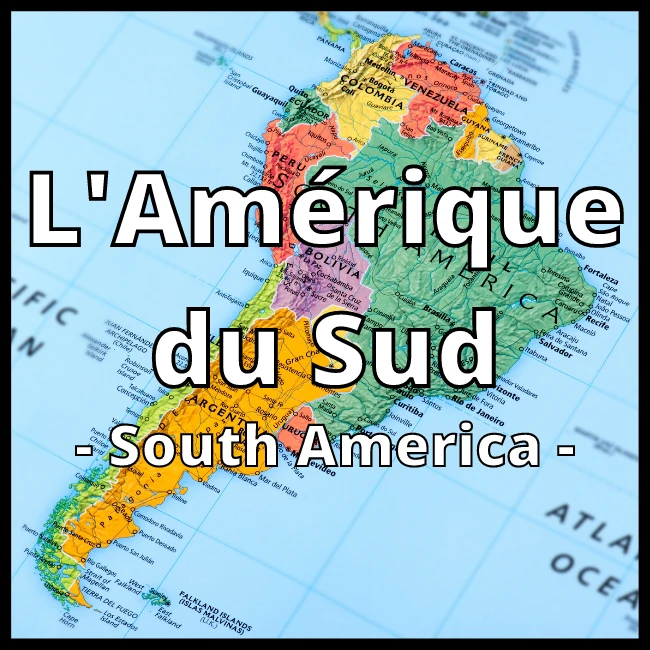
For South America (l’Amerique du Sud) you will see that almost every country has Spanish (l’espagnol) as its official language. The big exception is Brazil, where the official language is Portuguese (le portugais).
| Country | French Name | Nationality (m/f) | Language |
| Brazil | le Brésil | brésilien(ne) | le portugais |
| Colombia | la Colombie | colombien(ne) | l'espagnol |
| Peru | le Péru | péruvien(ne) | l'espagnol |
| Bolivia | la Bolivie | bolivien(ne) | l'espagnol |
| Chile | le Chili | chilien(ne) | l'espagnol |
| Argentina | l'Argentine | argentin(e) | l'espagnol |
| Venezuela | le Vénézuela | vénézuélien(ne) | l'espagnol |
| Ecuador | l'Équateur (m) | équatorien(ne) | l'espagnol |
| Paraguay | le Paraguay | paraguayen(ne) | l'espagnol |
| Uruguay | le Uruguay | uruguayen(ne) | l'espagnol |
Europe
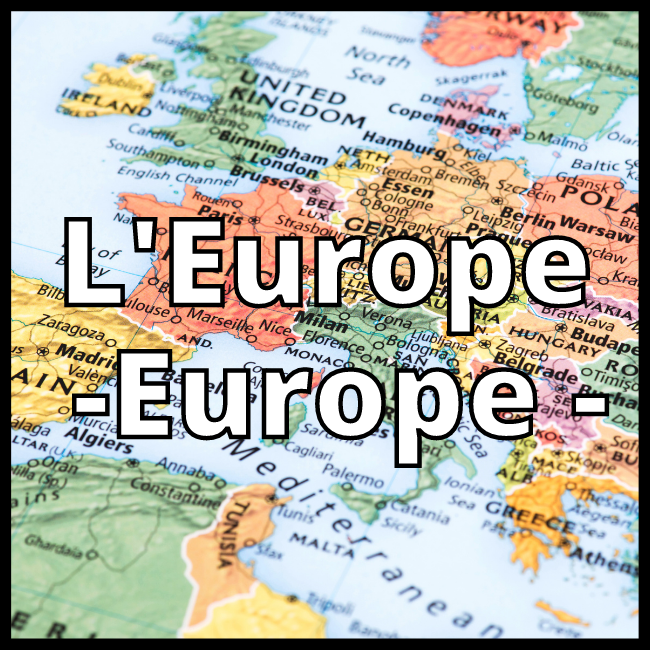
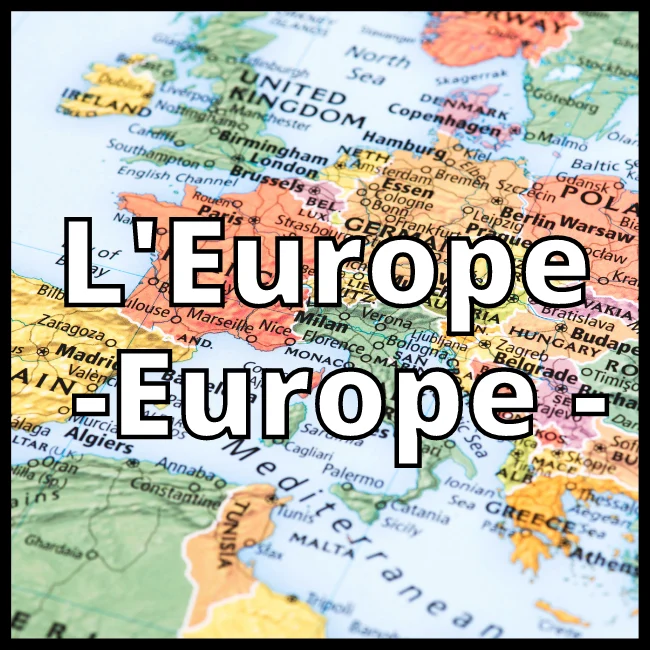
One easy aspect to learning the European coutries is that all of the countries surrounding France are feminine: la Belgique (Belgium), l’Allemagne (German), la Suisse (Switzerland), l’Italie (Italy) and l’Espagne (Spain).
| Country | French Name | Nationality (m/f) | Language |
| France | la France | français(e) | le français |
| Spain | l'Espagne (f) | espagnol(e) | l'espagnol |
| Switzerland | la Suisse | suisse | l'allemand, le français, l'italien |
| Italy | l'Italie (f) | italien(ne) | l'italien |
| The Netherlands | les Pays-Bas | néerlandais(e) | le néerlandais |
| Belgium | la Belgique | belge | le français, le flamand |
| Germany | l'Allemagne (f) | allemand(e) | l'allemand |
| England | l'Angleterre (f) | anglais(e) | l'anglais |
| Scotland | l'Écosse | écossais(e) | l'écossais |
| Ireland | l'Irlande (f) | irlandais(e) | l'anglais |
| Portugal | le Portugal | portugais(e) | le portugais |
| Greece | la Grèce | grec, grecque | le grec |
| Russia | la Russie | russe | le russe |
| Poland | la Pologne | polonais(e) | le polonais |
| Ukraine | l’Ukraine | ukrainien(ne) | l'ukrainien |
| Denmark | le Danemark | danois(e) | le danois |
| Norway | la Norvège | norvégien(ne) | le norvégien |
| Sweden | la Suède | suédois(e) | le suédois |
| Finland | la Finlande | finlandais(e) | le finlandais |
| Austria | l’Autriche | autrichien(ne) | l'allemand |
| Hungary | la Hongrie | hongrois(e) | le hongrois |
| Serbia | la Serbie | serbe | le serbe |
| Romania | la Roumanie | roumain(e) | le roumain |
| Bulgaria | la Bulgarie | bulgare | bulgare |
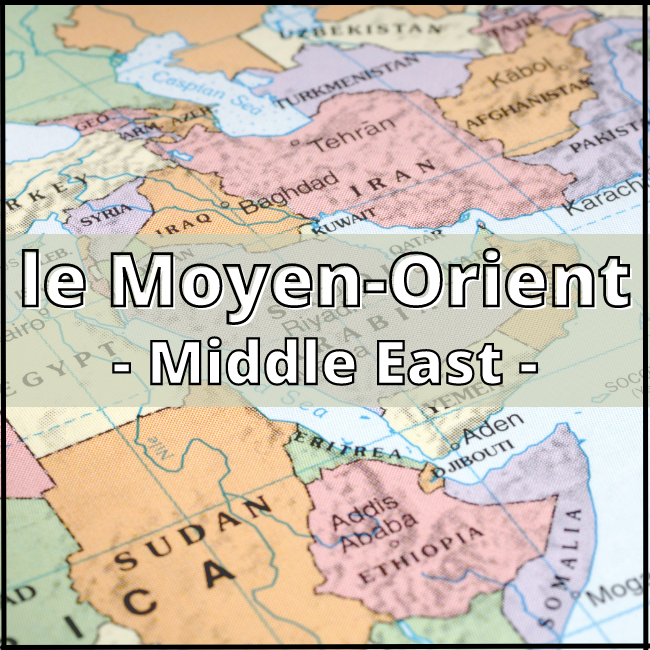
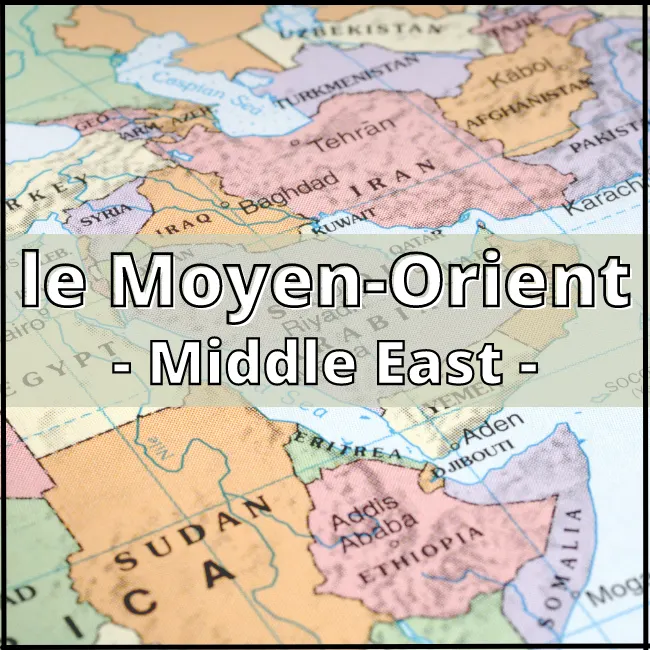
Middle East
For the Middle East, note that Israel does not take a direct object. Hence the name for Israel is simply, “Israël“.
| Country | French Name | Nationality (m/f) | Language |
| Israël | Israël | israélien(ne) | l'hébreu |
| Syria | la Syrie | syrien(ne) | l'arabe |
| Lebanon | le Liban | libanais(e) | l'arabe |
| Saudi Arabia | l’Arabie Saodite | saoudien(ne) | l'arabe |
| United Arab Emirates | les Émirats Arabes Unis | émirat(e) | l'arabe |
| Iraq | l’Irak | iraquien(ne) | l'arabe |
| Iran | l’Iran | iranien(ne) | le perse |
| Pakistan | le Pakistan | pakistanais | le ourdou |
| Turkey | la Turquie | turc, turque | le turc |
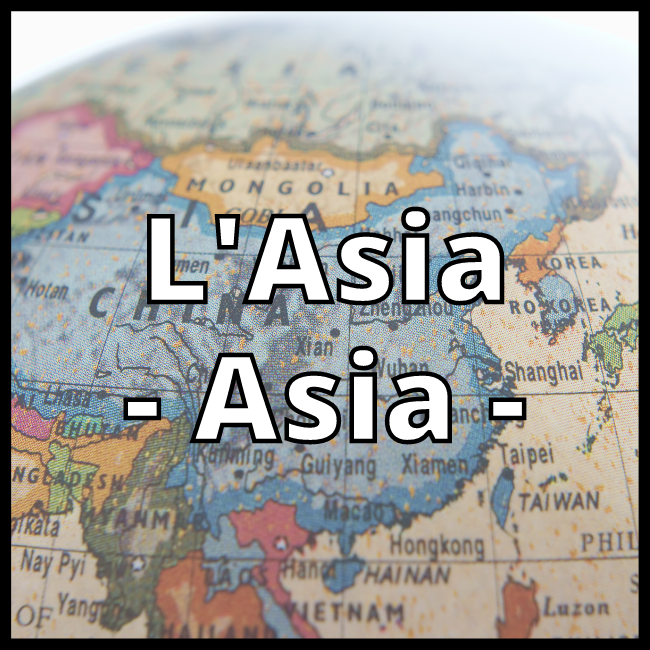
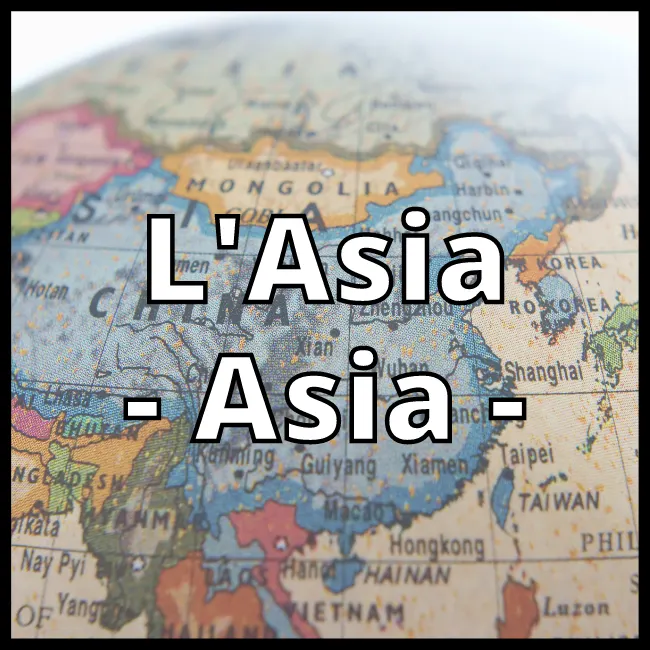
Asia
Note that for India (l’Inde) we put the language as Hindi (le hindi). While this is the official language. The country has a long list of local languages in addition to the common usage of English.
| Country | French Name | Nationality (m/f) | Language |
| China | la Chine | chinois(e) | le chinois |
| Japan | le Japon | japonais(e) | le japonais |
| South Korea | la Corée du Sud | coréen(ne) | le coréen |
| Thailand | la Thaïlande | thaïlandais(e) | le thaï |
| Laos | le Laos | laotien(ne) | le lao |
| Cambodia | le Cambodge | cambodgien(ne) | le khmer |
| Vietnam | le Vietnam | vietnamien(ne) | le vietnamien |
| the Philippines | les Philippines | philippin(e) | la tagalog |
| Malaysia | la Malaisie | malaisien(ne) | le malais |
| Indonesia | l’Indonésie | indonésien(ne) | l'indonésien |
| Singapore | Singapour | singapourien(ne) | l'anglais, le chinois, le malais |
| India | l'Inde | indien(ne) | le hindi |
| Nepal | le Népal | népalais(e) | le népalais |
| Mongolia | la Mongolie | mongol(e) | le mongol |
| OCEANIA | |||
| Australia | l'Australie | australien(ne) | l'anglais |
| New Zealand | la Nouvelle-Zélande | néo-zélandais(e) | l'anglais |
Africa
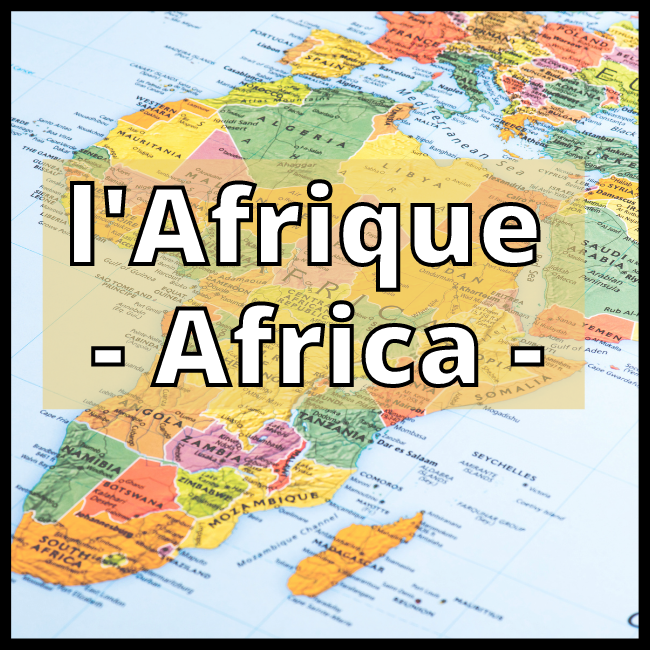
The following table has a column for the languages of African countries. This column is difficult to fill in as many African countries have scores of spoken languages.
In most of Africa, the countries use the languages of the formal colonial aggressors (mostly English and French) as well as local tribal languages.
| Country | French Name | Nationality (m/f) | Language |
| South Africa | l'Afrique du Sud | sud-africain(e) | l'anglais, l'afrikaans, le zulu |
| Nigeria | le Nigeria | nigérian(e) | le hausa, l'anglais |
| Ethiopia | l'Éthiopie | éthiopien(ne) | l'amharique |
| Ivory Coast | la Côte d'Ivoire | ivoirien(ne) | le français |
| Cameroon | le Cameroun | camerounais(e) | le français, l'anglais |
| Senegal | le Sénégal | sénégalais(e) | le wolof , le français, |
| Morocco | le Maroc | marocain(e) | le français, l'arabe |
| Algeria | l'Algérie | algérien(ne) | le français, l'arabe |
| Tunisia | la Tunisie | tunisien(ne) | le français, l'arabe |
| Libya | la Libye | libyen(ne) | l'arabe |
| Egypt | l'Égypte | égyptien(ne) | l'arabe |
| Sudan | le Soudan | soudanais(e) | l'arabe sudanais |
Discover more on FrenchLearner
👉 French speaking countries
👉 50 States in French
👉 Geography vocabulary
👉 French Word of the Day »
👉 French song lyrics hub »
👉 French Vocabulary lists »
👉 French for Beginners (start here) »


