
See also:
👉 Amuse-bouche »
👉 Hors d’œuvre »
Level A2 (Upper Beginner)
Published February 25, 2026 — Lesson written by French teacher David Issokson for students who want to learn French online, with native audio by Marie Assel Cambier, a voice artist from France.
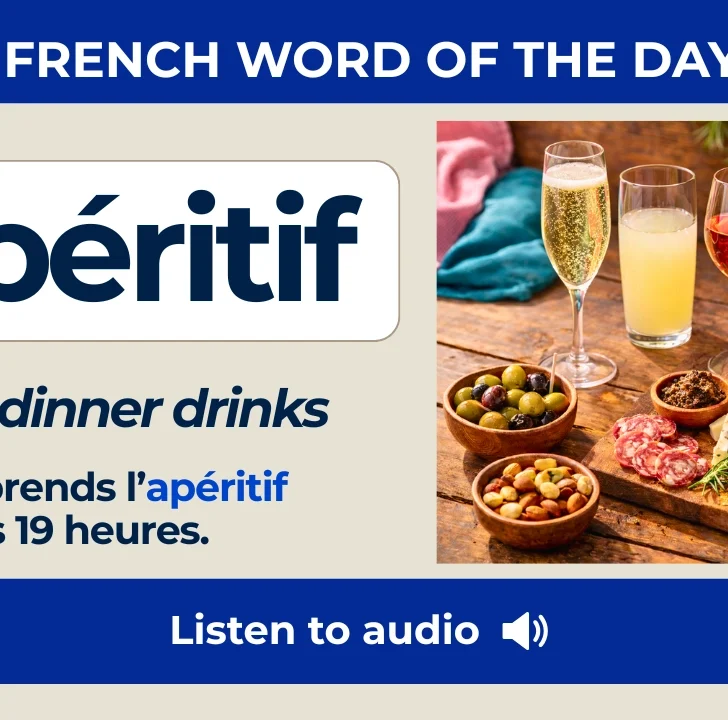
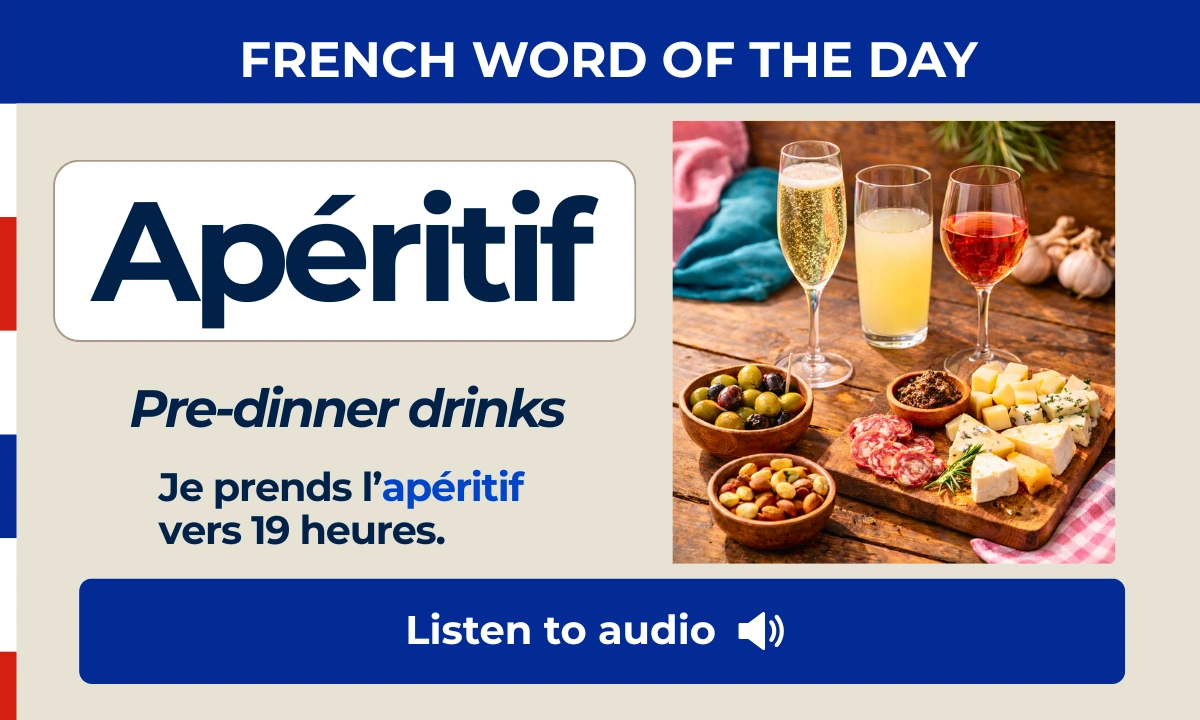
The French Word of the Day is apéritif, meaning “pre-dinner drinks.” The apéritif, or “apéro” in everyday spoken French, is an essential part of French social life. Today’s lesson explains what it means, where it comes from, and how to use it naturally in conversation.
📘 Apéritif meaning in French
Un apéritif means “an aperitif,” “a pre-dinner drink,” or simply “drinks” in English. The word is a loanword in English — spelled “aperitif” — and refers to an alcoholic drink served before a meal to stimulate the appetite. In everyday speech, French speakers often shorten it to the informal “apéro.” The word apéritif comes from the Latin verb aperire, meaning “to open.”
🍷 Cultural note
In France, l’apéritif is more than just one drink — it’s a social ritual. Friends or family gather before dinner for drinks and small snacks like olives, chips, nuts, or cheese. It’s common to hear: “On prend l’apéro ?” meaning “Shall we have pre-dinner drinks?” In many homes, the apéritif can last quite a while before the meal even begins.
Adults often drink wine, pastis (such as Ricard), or a kir during l’apéritif, while children are often served a diabolo menthe or diabolo fraise (lemonade mixed with mint or strawberry syrup).
🎧 Apéritif pronunciation in French
The pronunciation of l’apéritif is /la.pe.ʁi.tif/ (IPA), which sounds roughly like “lah-pay-ree-teef.”
📝 Apéritif usage examples
Je prends l’apéritif vers 19 heures.
I have an aperitif around 7 p.m.
En été, beaucoup de Français boivent un pastis à l’apéritif.
In the summer, many French people drink a pastis as an aperitif.
On fait un apéritif chez nous ce soir.
We’re having drinks at our place tonight.
👉 See also: Faire conjugation charts (to make, to do; with audio + quiz) »
Apéro chez Paul à 20h, tu viens ?
Aperitif at Paul’s place at 8 p.m., are you coming?
The word alcool (m. – alcohol) has long caused confusion among students because its pronunciation is hard to figure out from the spelling.
👉 See also: Alcool pronunciation and examples »
❓ Want to feel more confident in French?
🎯 À Moi Paris — This is my top recommendation for online French courses, and it pairs wonderfully with my daily lessons. Camille Chevalier teaches with engaging audio stories that she records at three speeds. Her specialty is helping students with pronunciation and bridging the gap between textbook French and real spoken French as you hear it on the streets of Paris.
👉 Explore À Moi Paris »
👉 Read my review »
🎧 French Verb Drills — Having trouble with French verb conjugations? Camille’s audio drills break everything down step by step so you can finally lock in the patterns and speak with confidence.
If you purchase the courses, I may earn a small commission — at no extra cost to you.
🔗 Related words and expressions
- boire de l’alcool — to drink alcohol
- sans alcool — alcohol-free
- une boisson alcoolisée — an alcoholic drink
- être ivre / être saoul — to be drunk
- un alcool fort — hard liquor
- le vin rouge / le vin blanc — red wine / white wine
- la bière pression — draft beer
- un cocktail — cocktail
📚 Related lessons on FrenchLearner!
👉 Alcool (alcohol) »
👉 Bourré (drunk) »
👉 Drinking age in France »
👉 French beverages vocabulary »
👉 Wine names pronunciation »


