
Level A1-A2 (Beginner)
Lesson written by French teacher David Issokson for students who want to learn French online, with native audio by Marie Assel Cambier, a voice artist from France.
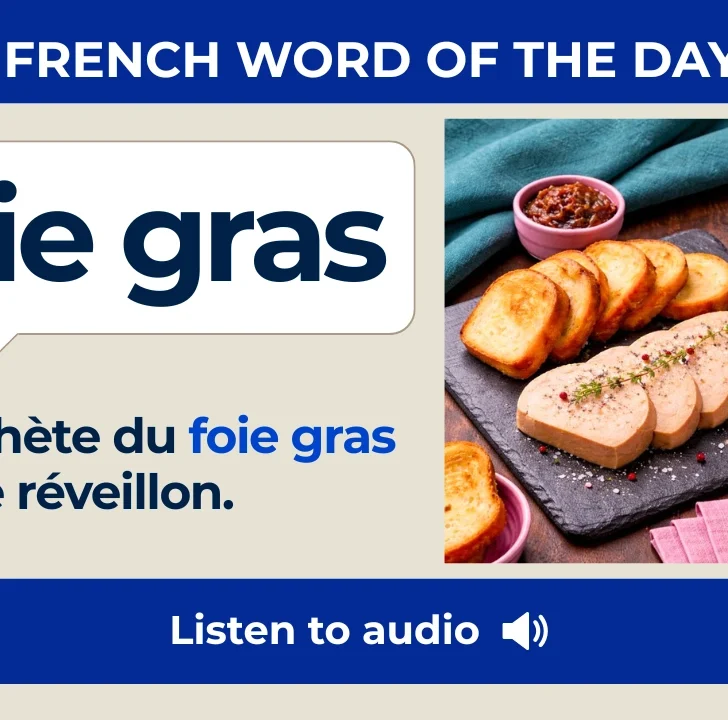
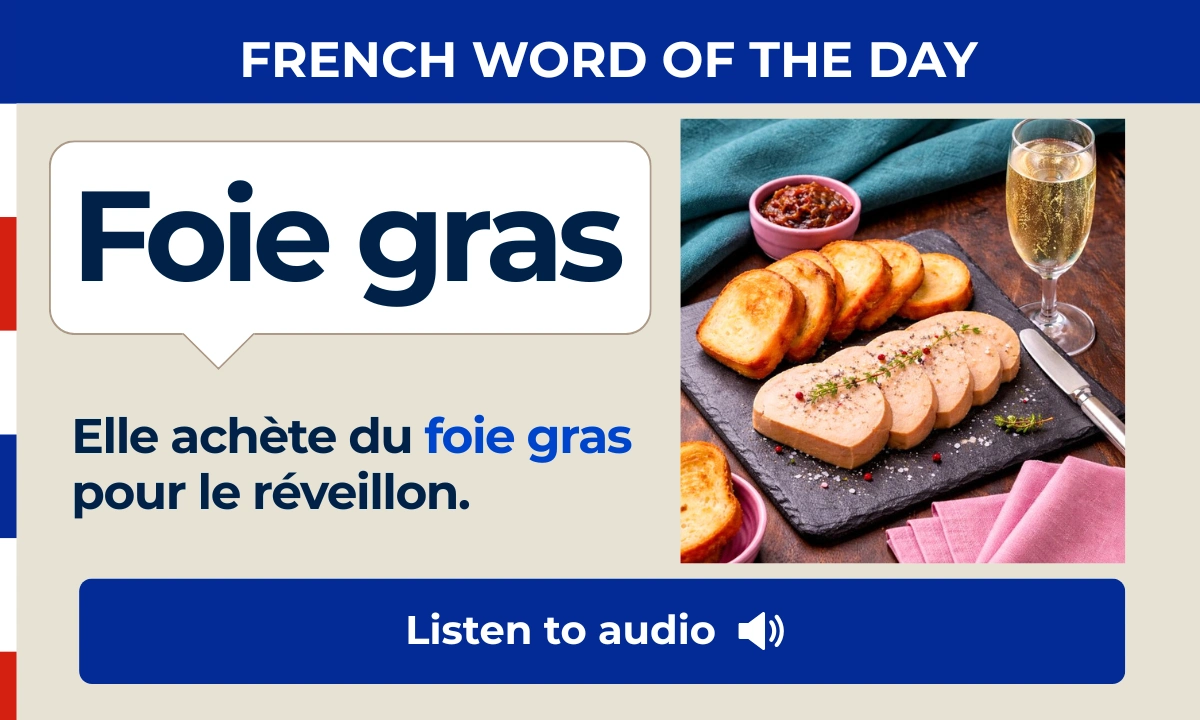
The French Word of the Day is foie gras (m.), a French luxury food that literally means “fat liver.” This delicacy is often served in France during Christmas Eve and New Year’s Eve dinners. I’ll never forget the rich, creamy texture the first time I tried it when I was an exchange student in France in 1991–92. Keep reading and listen to Marie’s audio clips to learn how to pronounce it perfectly.
✅ Meaning
✅ Pronunciation
✅ Example sentences
✅ Related Words & Expressions
✅ Related lessons
Subscribe to the French Word of the Day
📘 Foie gras meaning
Foie gras (m.) is a French delicacy made from the liver of a duck or a goose. The term literally means “fat liver” in French, and it refers to both the product itself and dishes prepared with it. In English, foie gras is used as a loanword, and the French name is kept rather than translated. Foie gras is known for its rich, buttery flavor and smooth, melt-in-the-mouth texture. In France, it is most commonly served cold, sliced, and eaten on toast or brioche, often as a starter.
🍽️ Cultural note
Foie gras is strongly associated with French holiday meals, especially Christmas and New Year’s celebrations. It is a classic dish served during le réveillon, the festive late-night meal on Christmas Eve. While it can be eaten year-round, many French people consider foie gras a luxury food reserved for special occasions, family gatherings, and celebratory meals.
🎧 Foie gras pronunciation in French
The pronunciation of foie gras is /fwa gʁɑ/ (IPA), which sounds like “fwah grah.”
📝 Foie gras examples & usages
Le foie gras est une spécialité française faite avec le foie d’un canard ou d’une oie, connue pour son goût riche et fondant.
Foie gras is a French specialty made from the liver of a duck or a goose, known for its rich, melt-in-the-mouth flavor.
Nous servons du foie gras sur des toasts pendant le repas de Noël.
We serve foie gras on toast during the Christmas meal.
Il achète du foie gras de canard pour le réveillon.
He buys duck foie gras for Christmas Eve dinner.
Elle préfère manger le foie gras avec un peu de confit d’oignons.
She prefers to eat foie gras with a little onion confit.
Discover more French Christmas foods (with audio)
❓ Want to feel more confident in French?
🎯 À Moi Paris — This is my top recommendation for online French courses, and it pairs wonderfully with my daily lessons. Camille Chevalier teaches with engaging audio stories that she records at three speeds. Her specialty is helping students with pronunciation and bridging the gap between textbook French and real spoken French as you hear it on the streets of Paris.
👉 Explore À Moi Paris »
👉 Read my review »
🎧 French Verb Drills — Having trouble with French verb conjugations? Camille’s audio drills break everything down step by step so you can finally lock in the patterns and speak with confidence.
If you purchase the courses, I may earn a small commission — at no extra cost to you.
🔗 Related words and expressions
- le foie gras de canard — duck foie gras
- le foie gras d’oie — goose foie gras
- le toast — toast
- le pain grillé — toasted bread
- le confit d’oignons — onion confit
- le réveillon — Christmas Eve dinner
- une spécialité française — a French specialty
- fondant — melt-in-the-mouth, tender
- un produit de fête — a festive product
📚 Related lessons on FrenchLearner!
👉 French Christmas vocabulary »
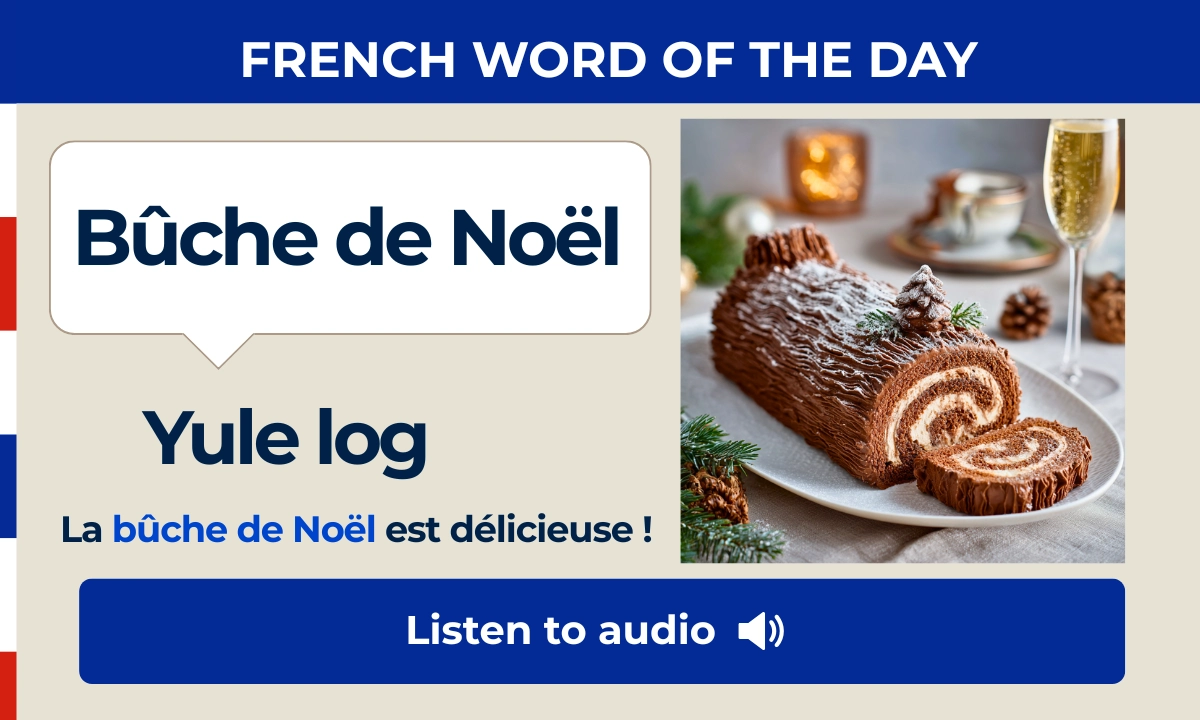
👉 Bûche de Noël — yule log »
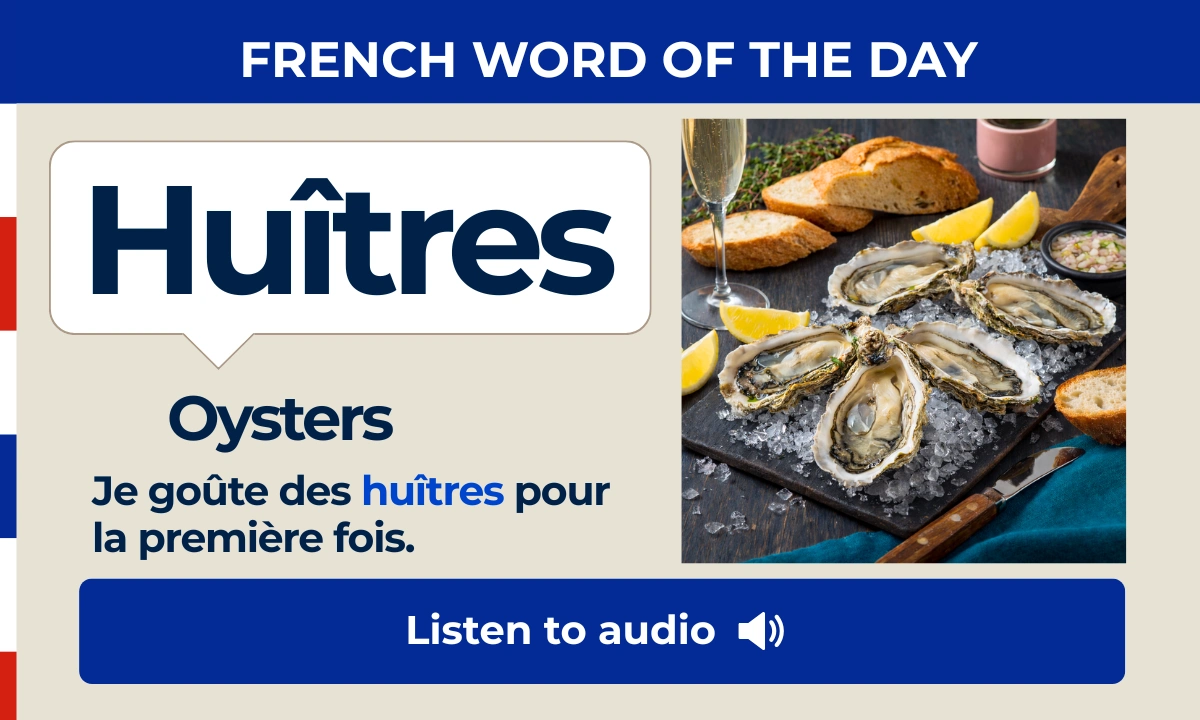
👉 Huitre — oyster »
👉 Joyeux Noël — merry Christmas »
👉 sapin de Noël — Christmas tree »
👉 Père Noël — Santa Claus »
👉 French Christmas traditions »
👉 French Christmas songs »
🚀 Continue learning French online on FrenchLearner!
👉 French Word of the Day »
👉 French Vocabulary lists »
👉 French for beginners guide »
👉 French song lyrics hub »
👉 French conjugations hub »


