

Published February 15, 2022 • Updated February 24, 2026 — Lesson written by French teacher David Issokson for students who want to learn French online, with native audio by Marie Assel Cambier, a voice artist from France.

Je suis pronunciation
The pronunciation of je suis is /ʒə sɥi/ (IPA), which sounds roughly like “juh-swee”.
What does “Je suis” mean?
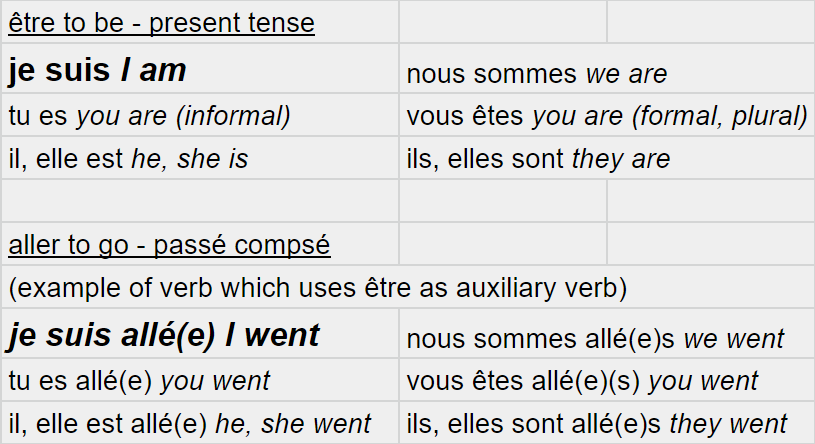
Je suis is the first-person singular (I) form of the verb être (to be) in the present tense. It means “I am” and is used to describe identity, profession, nationality, emotions, and location.
👉 See the complete être conjugation (all tenses with native audio) »
Examples of “Je suis” in sentences
Je suis is used to describe who you are, what you do, how you feel, and where you are.
Je suis vraiment occupé aujourd’hui.
I am really busy today.
Je suis professeur, mais je travaille aussi comme traducteur.
I am a teacher, but I also work as a translator.
Je suis déjà au restaurant, tu arrives ?
I am already at the restaurant, are you coming?
Je suis en train de préparer le dîner, tu veux m’aider ?
I am preparing dinner right now, do you want to help me?
👉 Learn how to use “en train de” (present continuous) here »
Using “je suis” in real situations
Introducing yourself
To introduce yourself, you can say:
Je suis Marie.
I am Marie.
However, the more common way to say “my name is” in French is:
Je m’appelle Marie.
My name is Marie.
Both are correct, but je m’appelle is more natural in everyday conversation.
Past tense constructions
Je suis is also used as an auxiliary verb in the passé composé with certain verbs, especially verbs of movement.
Je suis allé(e) à Paris.
I went to Paris.
Je suis venu(e) tôt.
I came early.
👉 Complete passé composé explanation »
Je suis + adjective
Use je suis followed by an adjective to describe identity, nationality, emotions, or physical condition. The adjective must agree in gender.
Je suis désolé(e).
I am sorry.
Je suis américain(e).
I am American.
Je suis fatigué(e).
I am tired.
Je suis content(e).
I am happy.
Je suis occupé(e).
I am busy.
Je suis beau / belle.
I am handsome / beautiful.
Location
Je suis is also used to describe where you are.
Je suis chez moi.
I am at home.
Je suis au travail.
I am at work.
👉 Learn how to use chez here »
Common expressions with “je suis”
Several everyday expressions use je suis:
Je suis d’accord.
I agree.
Je suis en train de travailler.
I am working (right now).
Je suis encore au travail.
I am still at work.
Je suis de retour.
I am back.
👉 Learn how to use être d’accord (to agree) here »
Common mistakes with “je suis”
Beginners often confuse être (to be) and avoir (to have) in certain expressions.
❌ Je suis très bien.
Use: Je vais très bien.
I am doing very well.
❌ Je suis faim.
Use: J’ai faim.
I am hungry.
❌ Je suis soif.
Use: J’ai soif.
I am thirsty.
❌ Je suis 20 ans.
Use: J’ai 20 ans.
I am 20 years old.
❌ Je suis intéressé au français.
Use: Je m’intéresse au français.
I am interested in French.
📚 Related lessons on FrenchLearner
👉 Être conjugation (all tenses with audio)
👉 Je m’appelle — how to introduce yourself
👉 En train de — the present continuous in French
👉 Common beginner mistakes
👉 French adjectives overview


