
Published August 3, 2022 · Updated June 4, 2026 — Lesson written by French teacher David Issokson. Pronunciation audio recorded by Marie Assel Cambier, a professional voice artist and native French speaker. Lyrics provided for educational purposes to support French language learning. All rights belong to the original copyright holders.
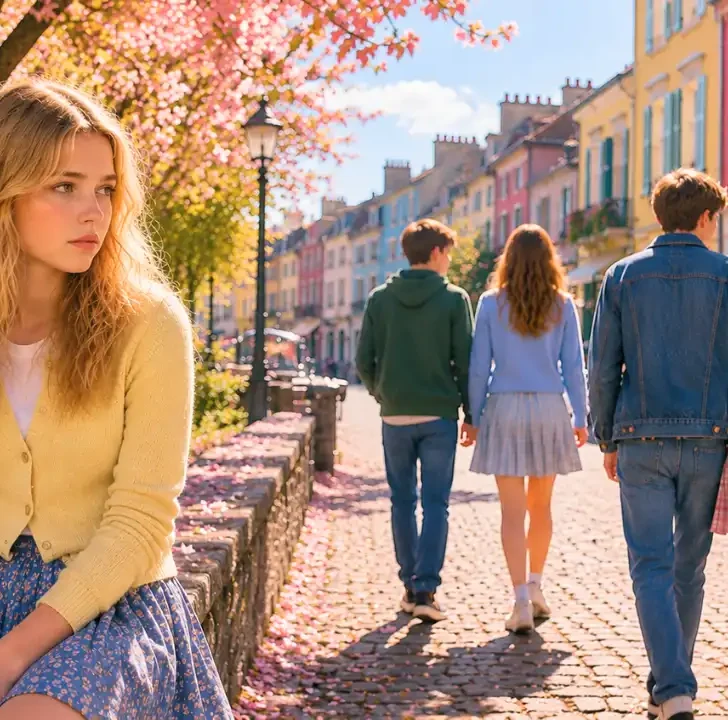
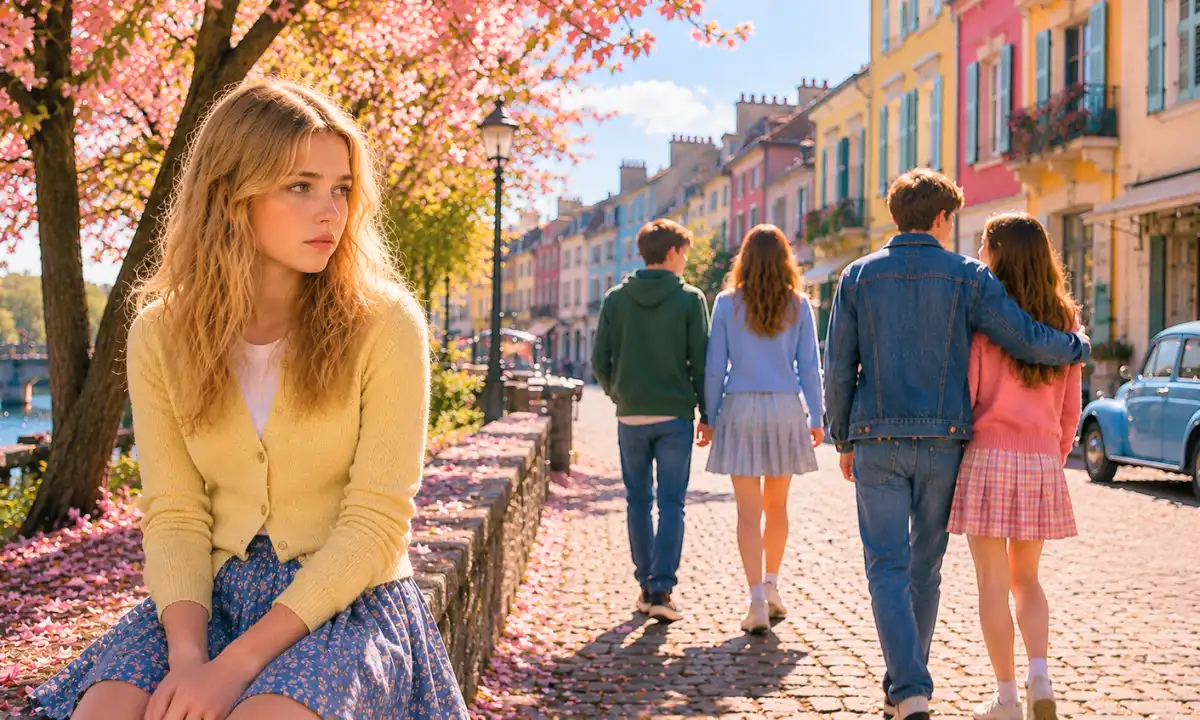
Tous les garçons et les filles (1962) by Françoise Hardy is a classic French song about loneliness, first love, and the desire to find a romantic partner. The narrator observes all the other boys and girls her age walking hand in hand and falling in love, while she remains alone. As the song progresses, she reflects on her sadness and isolation before ending on a hopeful note, wondering when her own turn to experience love will finally arrive.
This song is an excellent choice for A2-B1 learners because the lyrics are simple, repetitive, and easy to follow. You’ll encounter useful reflexive verbs such as se promener, s’en aller, and se demander, the common negative structure personne ne…, and important future forms including brillera, viendra, and j’aurai. The song also introduces a literary conditional form (connaîtrais-je) and useful everyday vocabulary such as l’amour, le cœur, la rue, la joie, and l’avenir.
🎙️ Listen to the song
📘 Meaning in French
✏️ Lyrics and notes
🎙️ Listen to “Tous les garçons et les filles”
Listen to Tous les garçons et les filles and see how much of the French lyrics you can understand before reading the translation and notes below.
📘 Tous les garçons et les filles meaning
Tous les garçons et les filles translates to “All the boys and girls”. The title refers to the couples the narrator sees around her — young people her age who seem happy, confident, and in love. Throughout the song, she contrasts their happiness with her own loneliness as she walks the streets alone, longing for someone to love her.
✏️ Tous les garçons et les filles lyrics and grammar notes
In this section, we’ll look at the lyrics from Tous les garçons et les filles and explore the French vocabulary, expressions, and grammar.
🎵 Song Title
Tous les garçons et les filles → literal translation: All the boys and girls
- Tous les garçons et les filles means “all the boys and girls”
- Garçon = boy; Fille = girl, daughter
- The title refers to the young couples around the singer
- Introduces the song’s themes of loneliness, love, and longing
🧩 Sentence Structures & Grammar
Tous les garçons et les filles de mon âge
👉 “All the boys and girls my age”
- Mon âge means “my age”
Se promènent dans la rue deux par deux
👉 “Walk through the street two by two”
- Se promènent = se promener (to stroll, walk) in the present tense
- Deux par deux means “two by two” or “in pairs”
Savent bien ce que c’est d’être heureux
👉 “Know well what it means to be happy”
- Savent = savoir (to know) in the present tense
- Ce que c’est means “what it is”
- Être = to be; heureux = happy
Et les yeux dans les yeux et la main dans la main
👉 “Eye to eye and hand in hand”
- Les yeux dans les yeux means “eye to eye”
- La main dans la main means “hand in hand”
- L’œil, les yeux = eye, eyes
- Expressions associated with romance
Ils s’en vont amoureux sans peur du lendemain
👉 “They go off in love without fear of tomorrow”
- S’en vont = s’en aller (to go away, leave) in the present tense
- Amoureux means “in love”
- Sans peur du lendemain means “without fear of tomorrow”
Oui mais moi, je vais seule par les rues, l’âme en peine
👉 “Yes, but I walk alone through the streets, heartbroken”
- Je vais = aller (to go) in the present tense
- Seule means “alone” (feminine form)
- La rue = street
- L’âme en peine means “heartbroken” or “sorrowful”
Oui mais moi, je vais seule, car personne ne m’aime
👉 “Yes, but I walk alone because nobody loves me”
- Car means “because”, “for” or “as”
- Personne ne… means “nobody”
- M’aime = aimer (to love) in the present tense
Mes jours comme mes nuits sont en tous points pareils
👉 “My days and nights are exactly alike”
- Sont = être (to be) in the present tense
- En tous points means “in every respect”
- Pareils means “alike” or “similar”
Sans joies et pleins d’ennuis
👉 “Without joys and full of troubles”
- Sans = without
- Pleins de means “full of”
- Les ennuis means troubles, worries, or problems
Personne ne murmure “je t’aime” à mon oreille
👉 “Nobody whispers ‘I love you’ in my ear”
- Murmure = murmurer (to whisper) in the present tense
- Je t’aime means “I love you”
- À mon oreille means “in my ear”
Tous les garçons et les filles de mon âge
👉 “All the boys and girls my age”
- Opening line of the second verse
Font ensemble des projets d’avenir
👉 “Make plans for the future together”
- Font = faire (to do, make) in the present tense
- Ensemble means “together”
- Des projets d’avenir means “plans for the future”
- Projet = plan, project
Tous les garçons et les filles de mon âge
👉 “All the boys and girls my age”
- Repeated refrain
Savent très bien ce qu’aimer veut dire
👉 “Know very well what love means”
- Savent = savoir (to know) in the present tense
- Aimer means “to love”
- Veut dire means “means”
- Common expression: vouloir dire (to mean)
Quand donc pour moi brillera le soleil ?
👉 “When will the sun shine for me?”
- Donc translates literally to “therefore”
- Brillera = briller (to shine) in the future tense
- The sun symbolizes happiness and love
Comme les garçons et les filles de mon âge
👉 “Like the boys and girls my age”
- Comme means “like”
- Introduces comparison with others
Connaîtrais-je bientôt ce qu’est l’amour ?
👉 “Will I soon know what love is?”
- Connaîtrais-je = connaître (to know, experience) in the conditional tense
- Inversion is used to form a question
- Ce qu’est l’amour means “what love is”
Comme les garçons et les filles de mon âge
👉 “Like the boys and girls my age”
- Repeated hopeful comparison
Je me demande quand viendra le jour
👉 “I wonder when the day will come”
- Je me demande = se demander (to wonder) in the present tense
- Viendra = venir (to come) in the future tense
Où les yeux dans ses yeux et la main dans sa main
👉 “When my eyes will meet theirs and my hand will be in theirs”
- Où means “where” but here it’s a relative pronoun meaning when
- Ses yeux (his/her eyes), Sa main (his/her hand); See: possessive adjectives
- Refers to a future romantic partner
J’aurai le cœur heureux sans peur du lendemain
👉 “I will have a happy heart without fear of tomorrow”
- J’aurai = avoir (to have) in the future tense
- Le cœur heureux means “a happy heart”
- Sans peur du lendemain repeats a key expression from the song
Le jour où je n’aurai plus du tout l’âme en peine
👉 “The day when I will no longer be heartbroken”
- N’aurai plus = avoir in the future tense with ne… plus (no longer)
- Du tout means “at all”; See pas du tout (not at all)
- L’âme en peine means “heartbroken”
Le jour où moi aussi j’aurai quelqu’un qui m’aime
👉 “The day when I too will have someone who loves me”
- Moi aussi means “me too”
- J’aurai = avoir (to have) in the future tense
- Quelqu’un means “someone”
- Qui m’aime = aimer (to love) in the present tense
🔤 Verb Forms & Tenses
- Present tense: se promènent, savent, s’en vont, vais, m’aime, sont, murmure, font, veut, me demande
- Future tense: brillera, viendra, j’aurai, n’aurai plus
- Conditional tense: connaîtrais-je
- Key infinitives: se promener, savoir, être, s’en aller, aller, aimer, être, murmurer, faire, vouloir, briller, connaître, se demander, venir, avoir
💬 Expressions & Idioms
- deux par deux → two by two
- les yeux dans les yeux → eye to eye
- la main dans la main → hand in hand
- sans peur du lendemain → without fear of tomorrow
- l’âme en peine → heartbroken, sorrowful
- en tous points → in every respect
- plein d’ennuis → full of troubles
- à mon oreille → in my ear
- vouloir dire → to mean
- le cœur heureux → a happy heart
📘 Vocabulary
- le garçon — boy
- la fille — girl
- l’âge — age
- la rue — street
- l’œil — eye
- la main — hand
- la peur — fear
- le lendemain — tomorrow, the next day
- l’âme — soul
- la joie — joy
- l’ennui — trouble, worry
- l’oreille — ear
- le projet — plan
- l’avenir — future
- l’amour — love
- le soleil — sun
- le jour — day
- le cœur — heart
- quelqu’un — someone
🎶 Take your learning to the next level!
FrenchLearner offers one of the largest collections of French song lessons online. Visit the French song lyrics hub to explore classics from the 1950s to the 2000s.
🎵 More Françoise Hardy songs you’ll love
👉 Comment te dire adieu »
👉 Le temps de l’amour »
👉 Mon amie la rose »
👉 La maison où j’ai grandi »
📚 See all Françoise Hardy songs »
🇫🇷 More French classic songs you’ll love
👉 La Vie en rose »
👉 La Bohème »
👉 Ne me quitte pas (Jacques Brel) »
👉 Les feuilles mortes (Yves Montand) »
👉 La mer (Charles Trenet) »


